
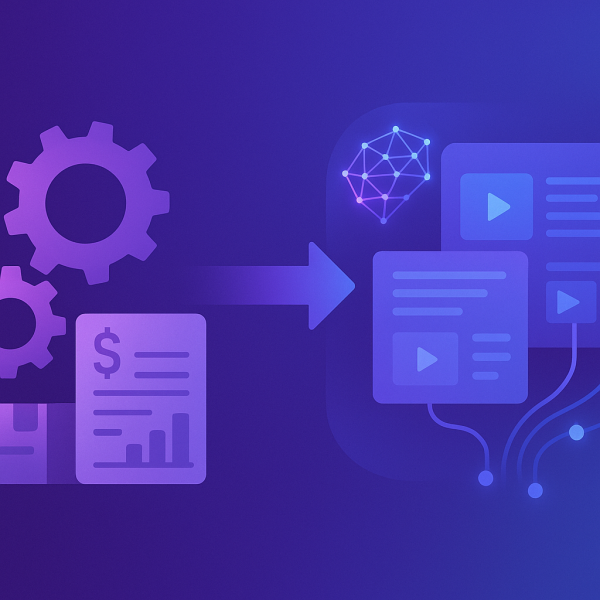
The role of the Value Engineer / Consultant was already undergoing a profound transformation, and now with AI – the evolution is accelerating even more. The same technologies that promise to automate discovery, content creation, and customer alignment are also reshaping what it means to support and scale value selling.
Does this mean fewer Value Engineers? Perhaps. But more importantly, it means a different kind of Value Engineer—one who empowers the field not by just building business cases and joining value selling and success review calls, but by orchestrating the systems, prompts, and strategies that power AI-assisted selling and success.
Here’s how this evolution is playing out—and what the next-gen Value Engineer must become.
From “Builder” to “Orchestrator”
Traditionally, Value Engineers were deeply embedded in late-stage deals, manually building ROI calculations, justification decks, and strategic business cases. The term “business case factory” applied.
In today’s AI-enabled environment, much of this work is being automated or augmented—by tools that synthesize data, craft narratives, and scale insights. But these tools don’t run themselves.
AI-driven value selling platforms require human expertise to design, guide, and govern. The new Value Engineer is the visionary and architect of these systems, not just a user. Their job evolves from crafting business value outputs one by one to designing prompts, templates, and workflows that generate value stories at scale.
New Responsibilities of the AI-Era Value Engineer
To thrive in this new environment, Value Engineers will take on new mandates:
1. Prompt Engineering and Model Tuning
Generative AI models need expert guidance to speak the language of business value. This includes:
- Crafting context-rich prompts that surface key pains, differentiators, and financial impact
- Embedding storytelling frameworks like PiVOT or GROWS into the prompt structure
- Iterating and tuning based on deal feedback and performance
In many ways, the Value Engineer becomes the Prompt Engineer for the go-to-market team.
2. Library and Intelligence Management
AI models are only as smart as the knowledge they’re trained on. This means:
- Curating and tagging customer stories, ROI models, objection handling responses, and value messaging
- Keeping competitive insights, industry benchmarks, and financial metrics up-to-date
- Connecting the right assets to the right personas and stages of the journey
The Value Engineer becomes a content librarian and intelligence curator, ensuring AI responses are sharp, relevant, and credible.
3. Field Activation and Support
Even with the best AI tools, sellers and customer success managers still need enablement. The modern Value Engineer supports activation through:
- Training and onboarding on how to use AI for discovery, value articulation, and business case creation
- Embedding AI into deal workflows, from CRM to collaboration tools
- Offering “value concierge” services for high-stakes opportunities where human + AI is the winning combo
AI doesn’t replace the Value Engineer—it extends their reach. But field success still depends on human guidance: value evangelism, coaching and support.
4. Alignment and Validation
AI-generated business cases still require strategic oversight and validation—especially for executive conversations. That means:
- Ensuring alignment with real customer priorities, strategic initiatives, and risk factors
- Validating assumptions, financial levers, and outcomes with stakeholders
- Adding the human touch to tailor and present the final story
The new VE is the strategic validator and value coach, ensuring AI doesn’t go off-script when it matters most.
The Bottom-Line: The Future Is Not Fewer, But Smarter
Will organizations need fewer Value Engineers? Possibly. But more likely, they will need Value Engineers who think differently—who build systems, manage knowledge, and empower others.
AI shifts the role from “craftsperson” to “conductor.” And that shift, when embraced, can enable unprecedented scale, consistency, and agility in how we deliver value to buyers and customers.
The next generation of Value Engineers will be at the center of it all – blending human insight and machine intelligence to elevate value in every customer conversation.
Ready to discuss this shift and explore how to scale your value communication, quantification and activation with AI?
Schedule with us here .